
Louison Beck
November 19, 2026
-
3 minutes


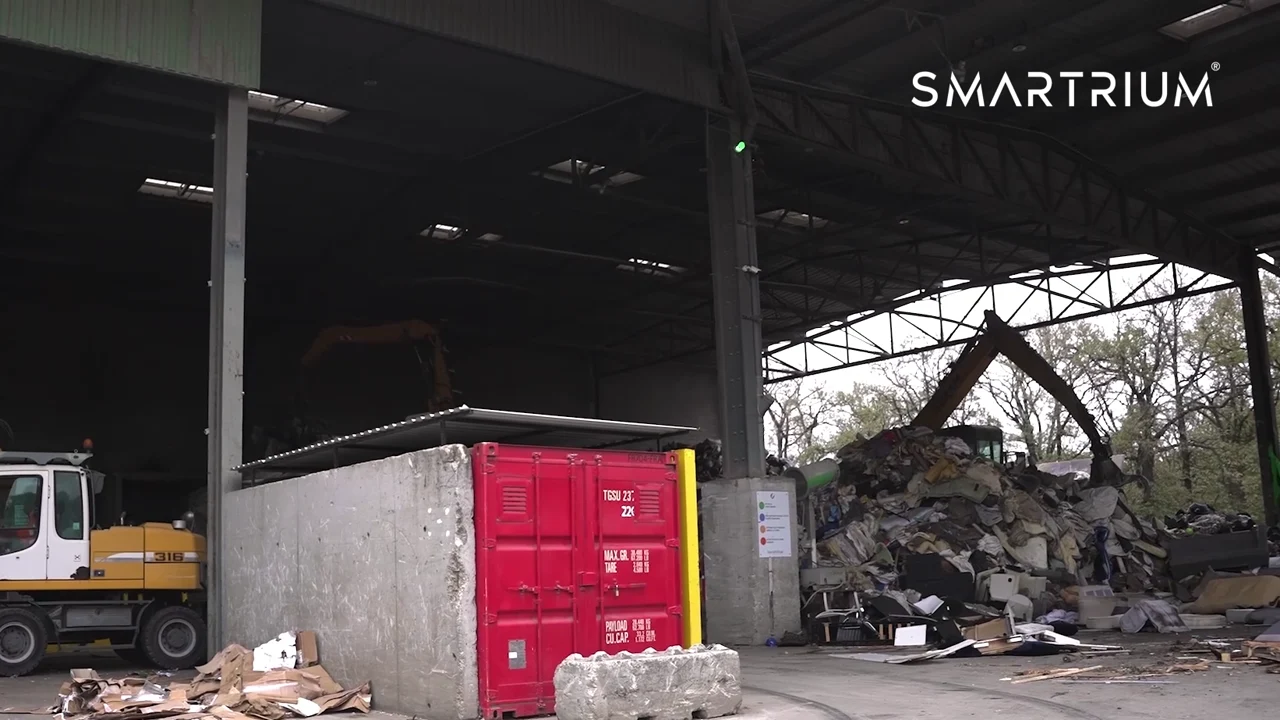
When a recycling facility is closed, three questions determine what can happen after a fire breaks out. Who detects the first signs of a fire in the affected area? Who receives the alert and can trigger a response? What fire-suppression equipment is available on site? In Mérignac, Péna Métaux had to address all three of these issues, facing a very real challenge: the water supply was located far from the area that needed protection.
In Mérignac, Péna Métaux buys and resells metals, processes plastics, and sorts mixed non-hazardous waste. Vincent Mouilhayrat, health, safety, and environment coordinator for the Péna Group, describes a specific risk: a batch may contain non-compliant waste that, upon impact or during handling, could cause a fire. For the site manager, the issue also involves off-peak hours. Once the last operator has left, who would be able to spot the first signs of a problem?
Each site has its own receiving, sorting, and storage areas. To assess detection coverage, site management can start with the last batch received and track its path: where is the material located at the end of the shift, and how would an anomaly at that location be reported?
At the Mérignac site, two detection arms transmit the alert to a remote monitoring center. The system thus connects the monitored area to an operator who can intervene remotely. It is this continuity that Vincent Mouilhayrat highlights as a key benefit for on-call personnel.
"It allows for early detection and suppression, even when no one is on site."
Vincent Mouilhayrat, Health, Safety, and Environment Coordinator for the Péna Group
To assess your own organization, consider a simple scenario: an alert comes in on a Sunday evening. Who receives it first? What information does that person have to pinpoint the source of the fire? Who can take action remotely, notify the on-call staff, and alert emergency services according to site procedures? These questions help identify a step that would still depend on an employee being on site. Discover how Fire Rover combines detection, remote monitoring, and remote response.
In Mérignac, the distance from the water supply network influenced the choice of system. After consulting with its insurer, Péna Métaux worked with Smartrium to design a standalone system: a tank installed in a container supplies water to a water cannon. In this case study, the term “standalone” refers to the water supply. The remote monitoring center handles the alert system.
This point deserves consideration as soon as the area to be protected is defined. Where does the fire suppression system draw its water from? What area does it cover from its location? The significance of the Mérignac example lies in the connection between these two decisions: the water supply was planned based on the area the site intended to protect after closure.
Watch the video testimonial from Péna Métaux in Mérignac to hear Vincent Mouilhayrat explain the insurer’s role, his interactions with other recyclers, and how the facility is changing compliance requirements. To compare this choice with that of another operator, find out how CAP Recyclage protects its upstream inventory of solid recovered fuel.